Project 2
Strategic Redesign: Simplifying the Digital Claims Experience
Employer
Gjensidige
Sector
Expertise
Date
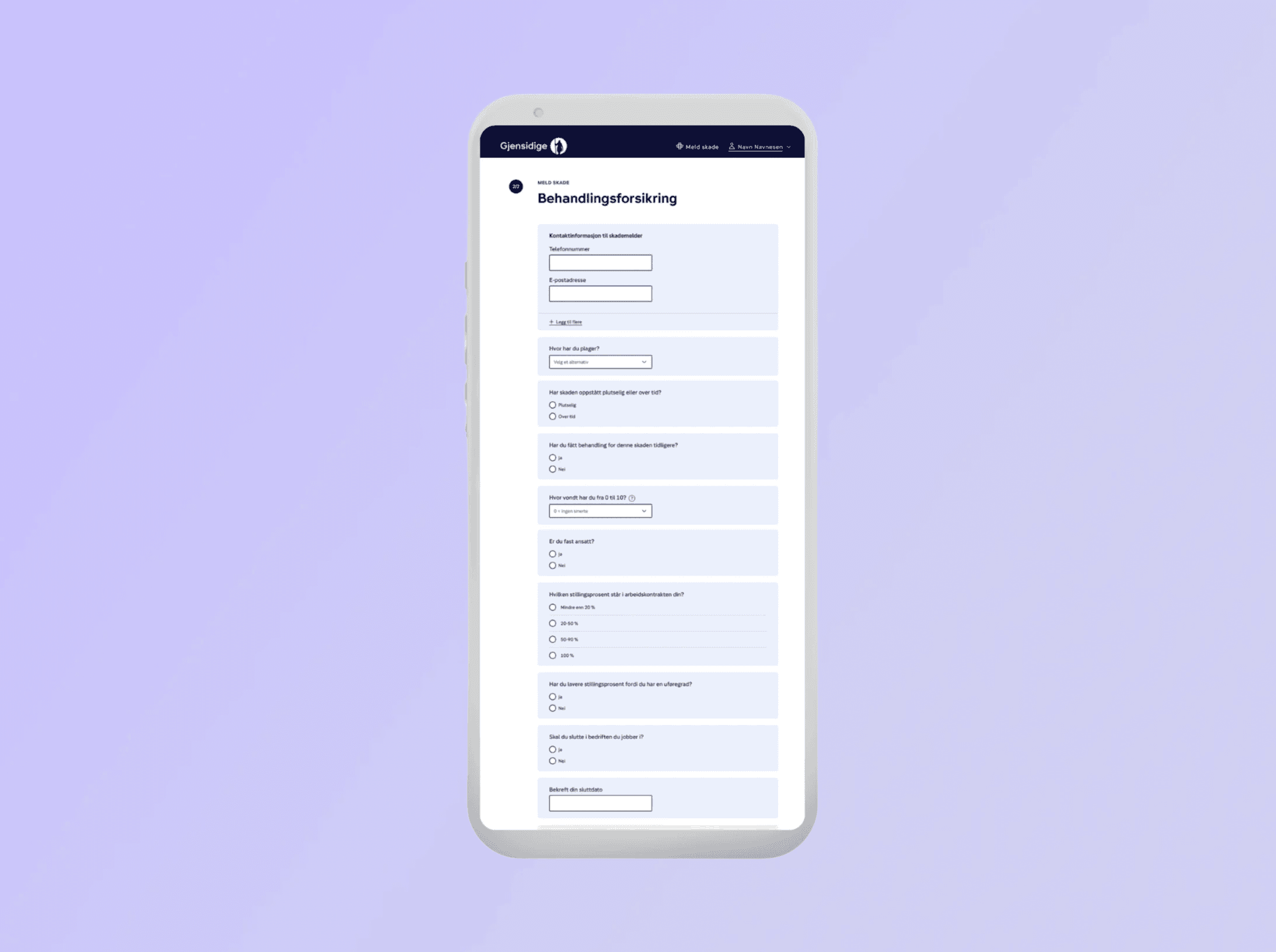
Role & Collaboration
My role • Product Designer / UX Lead: owned end-to-end redesign scope and design decisions from problem definition to dev-ready prototypes. • Responsible for aligning stakeholders and translating insight into a prioritised, implementable solution in Figma (Builders design system). Team • Sole UX designer, collaborating closely with a Service Designer and Content Designer. • No dedicated development team was assigned during this phase due to ongoing organisational changes. How we worked • Worked in short alignment loops with stakeholders to confirm scope, constraints, and decision points. • Delivery format: annotated Figma prototypes + prioritised recommendations and acceptance criteria, ready for implementation when ownership and developers were in place.
The Problem -->
Customers faced significant friction and uncertainty during the digital claims process, often unsure of eligibility, required documentation, and the proper starting point. This challenge resulted in dropped claims, high frustration, and a strong dependency on phone support. Structural and Content Barriers: • Overly long and confusing end-to-end flow. • Critical eligibility information appeared too late. • Ambiguous language and unclear help texts. • Difficulty understanding coverage criteria and eligibility. • Unnecessary or irrelevant steps that added process friction. Collectively, these barriers contributed to 30,000+ annual support calls, highlighting a systemic failure to enable effective self-service.
Initial State: Customer Journey Pain Points
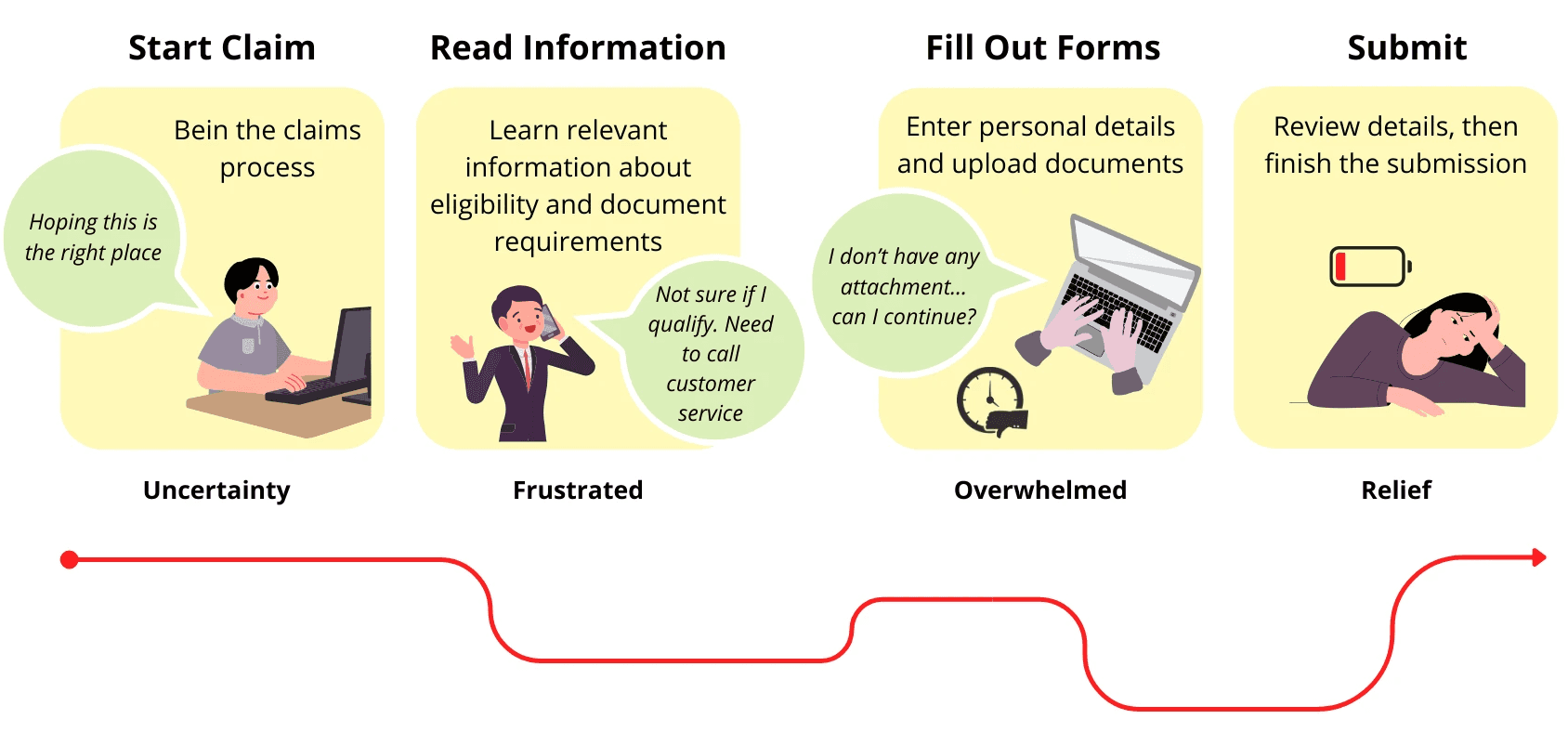
A visual map of the original claims journey, illustrating key friction points such as unclear starting points, delayed eligibility confirmation, and overwhelming, lengthy form steps. These issues were the root cause of high confusion and dependency on support.
My Process-->
User Insight • In-depth interviews and live call listening to map real customer pain points. • Analysis of qualitative data (complaints, chat logs) and quantitative customer data. • Baseline usability testing of the existing flow (pre-redesign benchmark). • Domain input from clinicians (nurses, physiotherapists, psychologists) to ensure medical/regulatory accuracy. Findings • Users consistently exhibited uncertainty regarding the correct starting point. • Eligibility rules were introduced late, causing major misunderstandings and errors. • Ambiguous language and help texts increased cognitive load and difficulty of interpretation. • Identified some steps as value-less friction points that could be removed. Solution • Simplified and significantly shortened the full end-to-end claims journey. • Relocated critical information (e.g., eligibility) to the earliest stages of the flow. • Clarified language, rules, and document requirements for clear comprehension. • Implemented predictable navigation paths and a clearer information structure. • Strengthened front-loaded communication regarding eligibility and coverage criteria. Iteration • Formative usability testing of prototypes with previous claim-submitters. • Iteratively refined structure, content, and navigation based on user feedback loops. • Conducted multiple stakeholder reviews to ensure regulatory accuracy and internal alignment.
Discovery: Annotated Markup for Workshop Prioritization
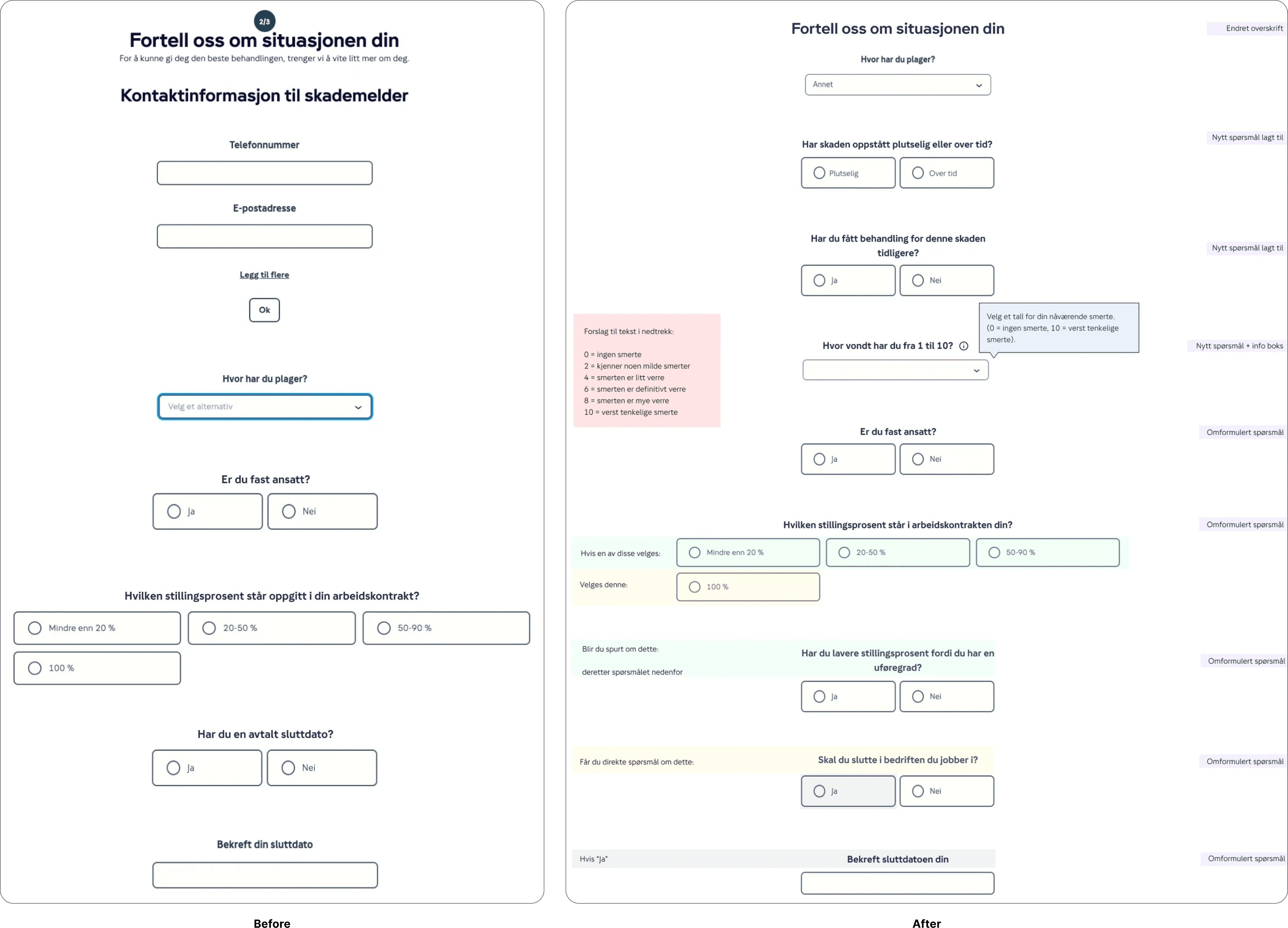
Side-by-side screens from the existing flow, annotated with cross-functional input gathered from nurses, therapists, physiotherapists and customer advisors. This visual markup was used to prioritize design improvements, refine content, reorder questions, and define project scope/feasibility.
Outcome -->
• Delivered a significantly shorter and structurally clearer claims flow. • Enabled stronger self-service adoption and minimized user misunderstandings. • Users were able to access and act upon relevant information earlier in the process. • Increased the percentage of customers who completed the process independently. • Addressed the root causes contributing to the 30,000+ annual support calls. • Achieved stronger internal alignment on flow structure, content guidelines, and logic.
Solution: Shortened and Predictable Claims Flow
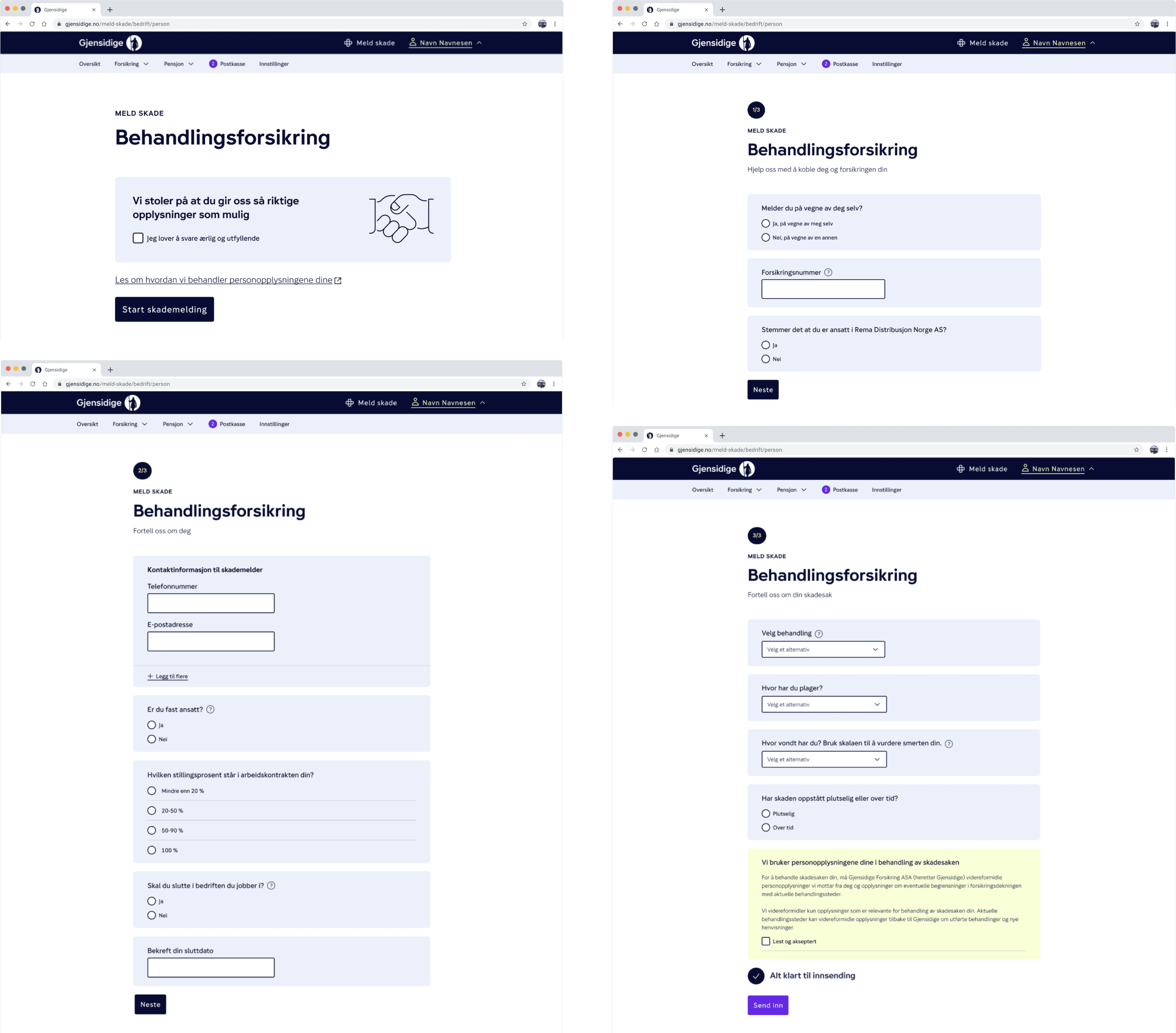
Screens illustrating the redesigned, streamlined flow, where users access critical information earlier and complete each form with fewer interruptions and heightened self-service guidance.
Outcome: Simplified Customer Journey (Post-Redesign)
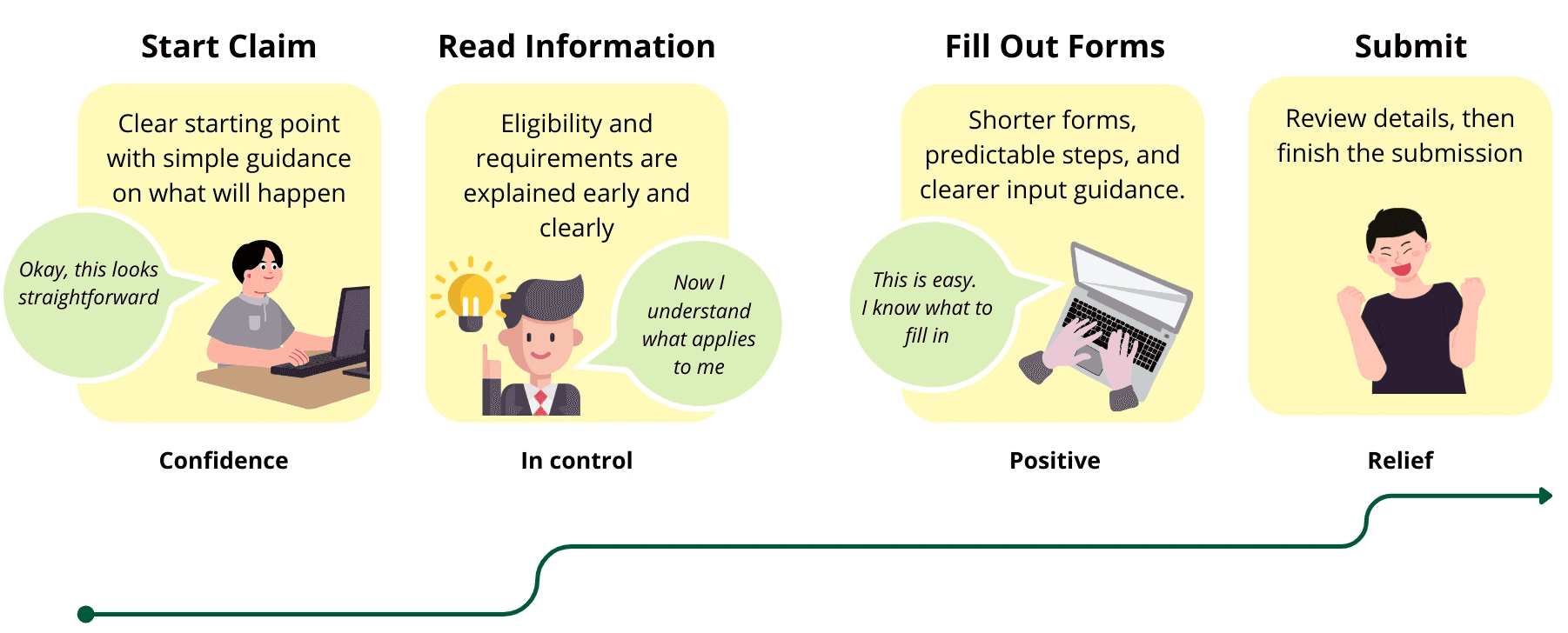
The final simplified journey, where users move through each step with confidence and increased independence. This is supported by concise forms, front-loaded explanations, and unambiguous navigation, resulting in a substantially smoother claims experience.
This project strengthened my skills in: • Mastering end-to-end UX research within a service design framework. • Expertise in synthesizing qualitative and quantitative data to drive design decisions. • Designing complex transactional flows where clarity is the primary driver of self-service. • Rapidly validating core assumptions and iterating designs based on real user feedback. • Collaborating with cross-functional experts to ensure technical and regulatory accuracy. If taken further, I would conduct contextual inquiry to observe real-life completion patterns and identify new opportunities for simplification.