Project 3
Gamification Strategy: Demystifying Insurance for SMB
Employer
Gjensidige
Sector
Expertise
Date
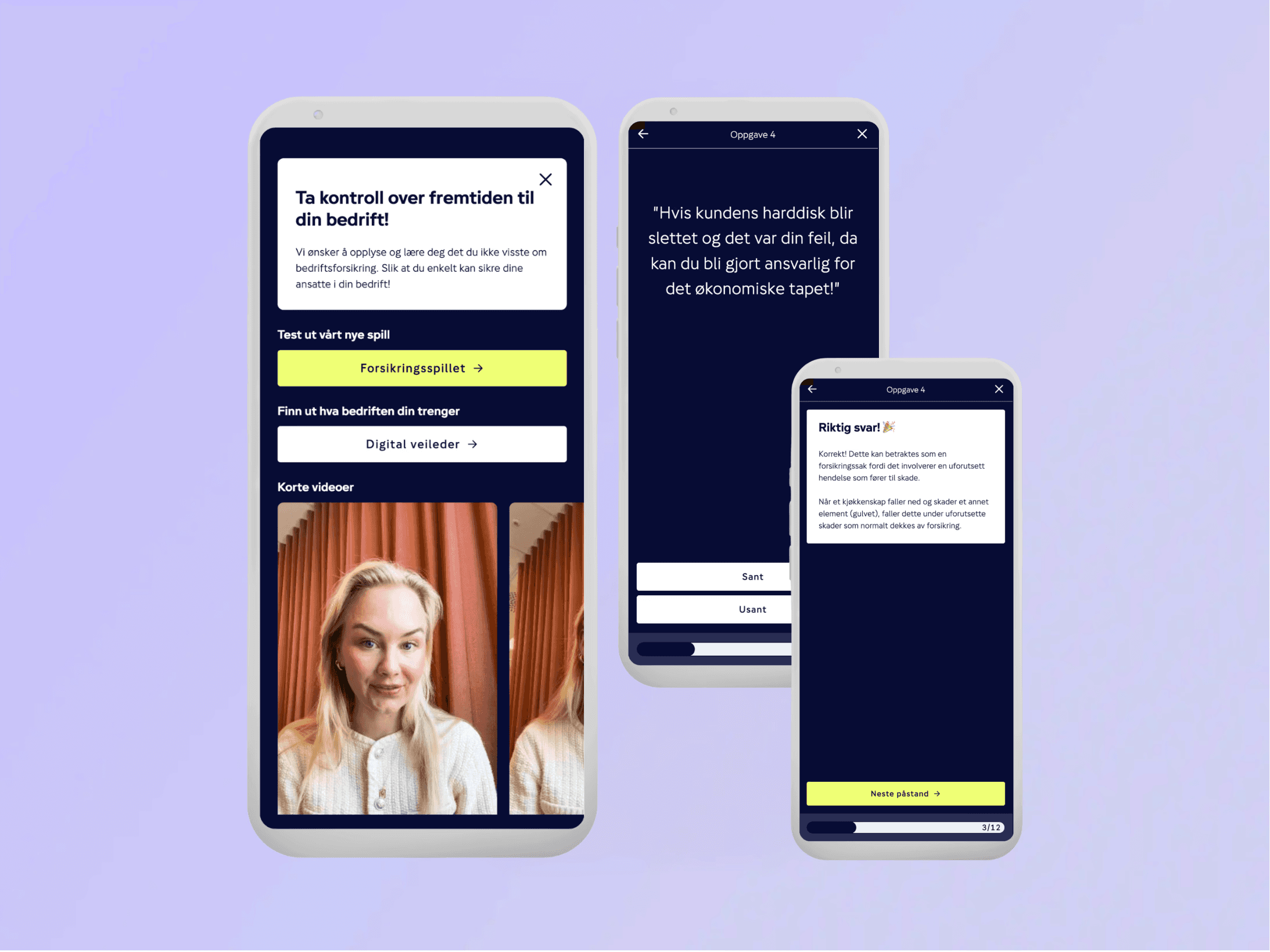
Role & Collaboration
My role • UX/Interaction Designer & Team Lead: owned the new concept end-to-end (discovery→ concept→ prototype→ test). • Team lead responsibilities: facilitated workshops, aligned scope/priorities, and ensured progress across disciplines. Team • 2 designers, 1 developer, and 1 marketer. How we worked • Sprint-based collaboration using core Scrum rituals (planning, reviews, retros). • Worked on the project two days per week with tight design–dev alignment
The Problem -->
Small-to-Medium Business (SMB) clients consistently struggled with the complexity of insurance, leading to avoidance and decision paralysis. Core Engagement Barriers: • Pervasive low motivation to proactively engage with insurance planning. • High uncertainty regarding product relevance and coverage fit. • Excessive cognitive load due to complex, jargon-heavy terminology. • Limited or unproductive dialogue with advisors due to clients feeling unprepared or overwhelmed. Ultimately, this created an overwhelming perception of the topic, eroded client trust, and severely limited the chance for productive consultative conversations.
Discovery: Persona & Cognitive Barrier Mapping
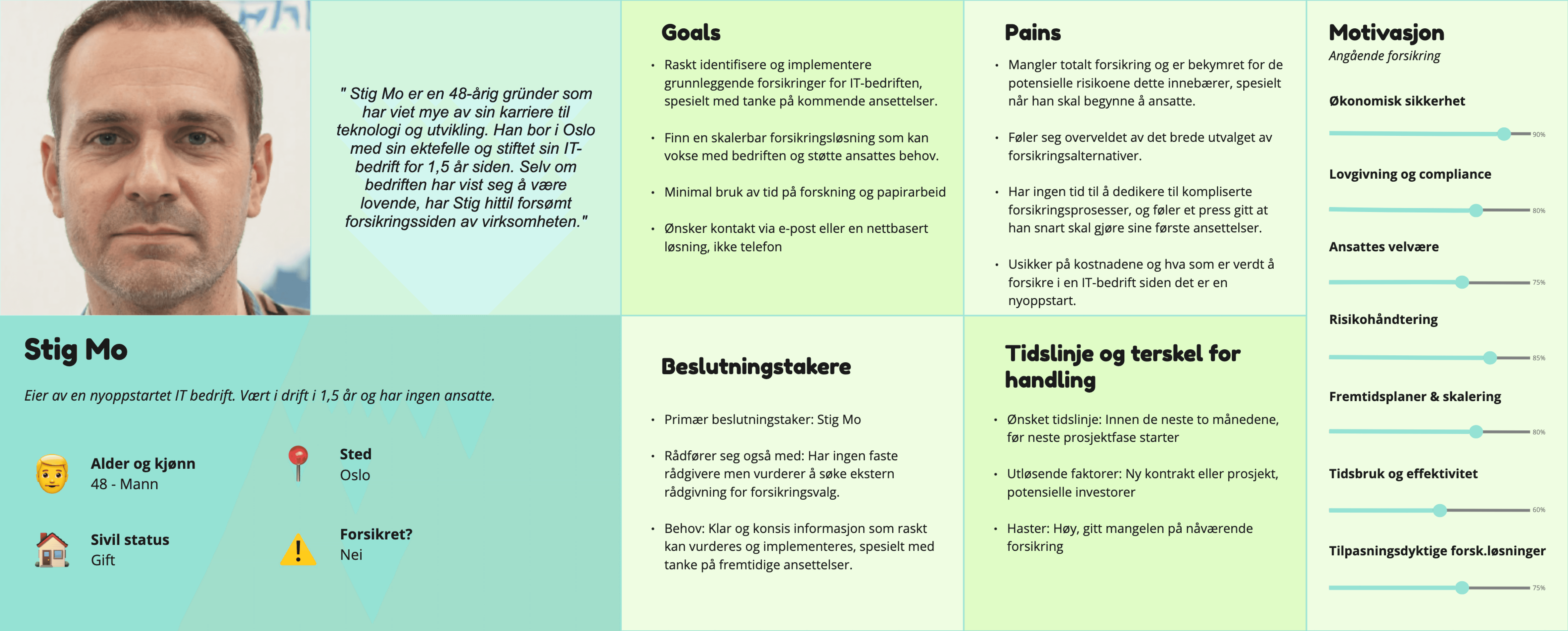
A persona card visualizing the typical SMB insurance buyer, highlighting key elements like goals, decision patterns, and the cognitive barriers they face. This artifact was crucial for aligning cross-functional teams on genuine customer needs and pain points.
My Process -->
User Insight • Conducted 4 in-depth qualitative interviews with target SMB clients. • Gathered advisor feedback to identify recurring themes of customer confusion. • Mapped existing customer journeys to pinpoint specific cognitive barriers. • Led cross-functional workshops with Product, Brand, and Advisory teams for alignment. Findings • Clients lacked clarity on which insurance products were relevant to their business type. • Language was overly complicated and implicitly required high levels of prior domain knowledge. • Users avoided engagement due to the topic being perceived as "too heavy" and intimidating. • Confirmed low engagement and retention with existing educational material. Solution • Developed a gamified concept with interactive quizzes, guided modules, and clear visual cues. • Designed and validated intuitive, light-weight prototypes with a core focus on user motivation. • Simplified terminology and made complex questions contextually accessible. • Created a structured, progressive experience with defined learning outcomes at each stage. Iteration • Conducted iterative usability testing with target SMB clients. • Refined game pacing, difficulty levels, and terminology based on user performance. • Maintained continuous collaboration with Content, Product, Development, and Brand teams. • Employed a Scrum-based workflow with regular design reviews and iterative improvements.
Process: Quiz-Based Learning
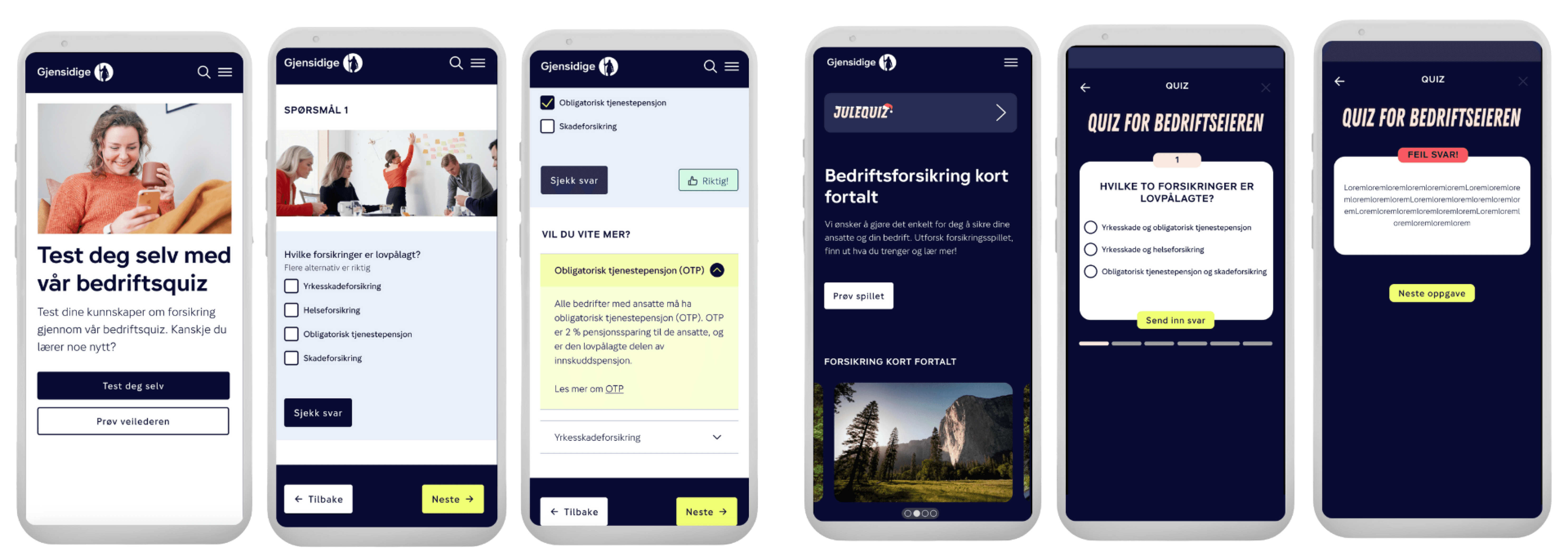
Mobile screens showing an early quiz prototype for SMB clients. Users receive short questions, direct feedback, and simple explanations. Early versions were usability-tested with real SMB clients, and insights were used to redine language, interaction, and content before further development.
Outcome -->
• Reduced the cognitive barrier for clients to start meaningful advisor conversations. • Successfully made a complex, dry topic more approachable, engaging, and digestible. • Demonstrated increased user motivation, engagement, and content understanding through testing. • Generated strong internal feedback and became a benchmark for innovation and quality. • Supported continued development and received promotional backing from the Brand team.
Prototype: Final result
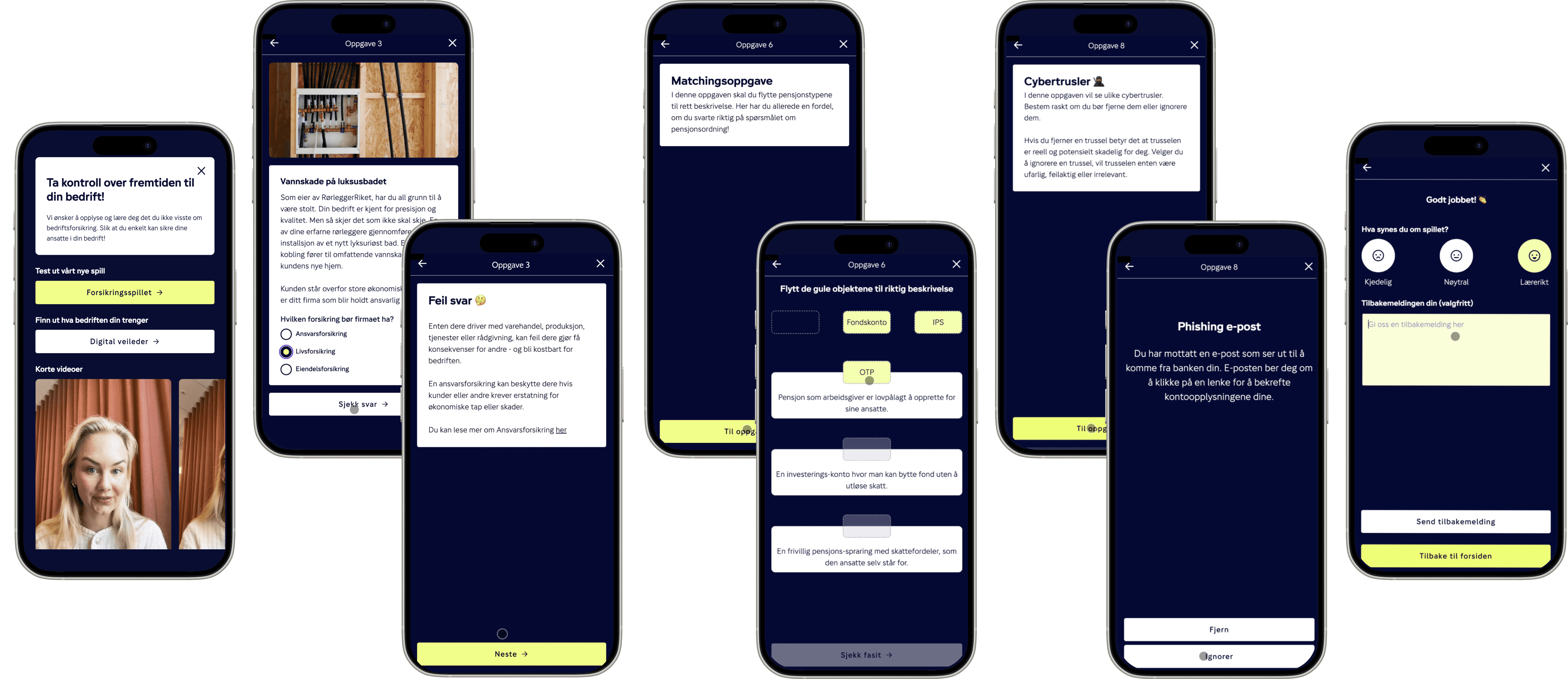
Screens from the final version of the Insurance Game. The solution features interactive tasks, guided learning paths, and simplified explanations designed to make insurance understandable, highly engaging, and less cognitively demanding for the target SMB audience.
This project strengthened my skills in: • Mastering end-to-end UX research in a concept-development context. • Expertise in designing for motivation, engagement, and reducing cognitive load in complex domains. • Simplifying complex, jargon-heavy information through clear, motivating interaction design. • Leading cross-functional collaboration across Content, Development, Brand, and Product. • Skilled in facilitating design workshops, communicating key findings, and aligning stakeholders. • Rapid iterative design informed by real user insight and qualitative feedback. If iterated further, I would explore personalized difficulty levels and adaptive learning logic to tailor the experience for varied SMB segments.